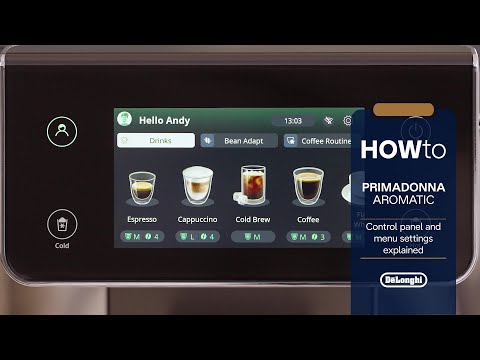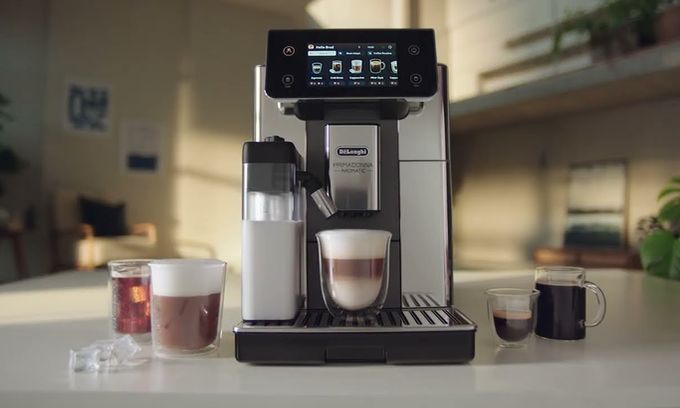


Since 2019, Delonghi Maestosa has successfully served as the main flagship of the famous Italian brand. But nothing lasts forever, and in the spring of 2025, the company introduced a new premium Delonghi Primadonna Aromatic series. For reference, it received the prestigious Reddot winner 2025 design award.

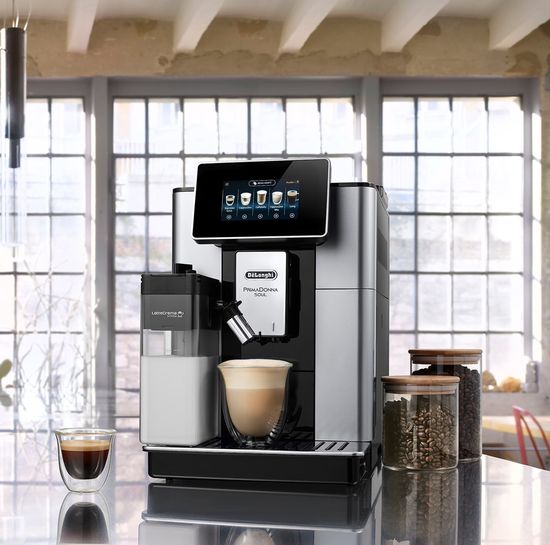
The series includes the flagship ECAM 630.75.TSM (Titanium/Metallic), ECAM 630.35.SB, ECAM 630.55.SSM, and ECAM 630.55.SM. The models differ primarily in functionality. For example, unlike the 630.55, the flagship 630.75 comes with an additional LatteCrema Cool milk jug for frothing milk at low temperatures.
Primadonna Aromatic
The new series can be positioned as a combined, improved version of the Delonghi Soul on the ECAM 610.xx platform with Bean Adapt technologi, the Eletta Explore with cold extraction, and the Delonghi Rivelia with Coffee Routine feature. In fact, the new flagship embodies all the popular innovations of the brand, including a coffee grinder with flat steel burrs, the ability to prepare the original Cold Brew without ice, and a unique technology for cold foaming of milk foam.
Until now, only the Delonghi Maestosa and a few Delonghi Soul models were equipped with grinders using flat steel burrs and a 7-level electronic grind setting. The debate about the pros/cons of flat and conical burrs is lively, but no one disputes the more uniform grind of flat burrs, which is important for espresso.

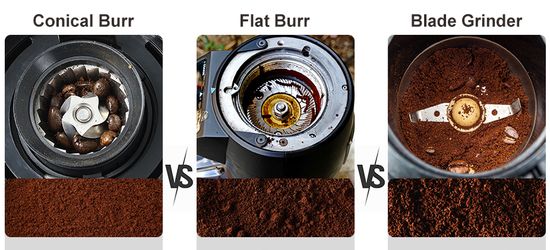
As a result, Aromatic makes superb espresso, filter coffee imitation and Americano, that are on par with leading competitors from Jura and Nivona.
The new flagship supports the Coffee Routine feature, first implemented in the Delonghi Rivelia. Essentially, it’s an expanded version of the automatic drink sorting on the main screen based on brewing frequency. Simply put, for a coffee lover with a clear preference for Americano, who sometimes likes espresso and a rare Filter Style, the coffee machine will display a similar sequence of these programs.
Coffee Routine automatically sorts by time of day, including ‘morning’ (4:00-11:00), ‘lunchtime’ (11:00-14:00), and ‘later in the day’ (14:00-04:00). As a result, a fan of Cappuccino Mix in the morning, espresso at lunch, and Filter Style in the evening will always see these programs first on the screen at the appropriate time. Moreover, individual sorting is remembered for each of the four user profiles.
Bean Adapt
This technology was first implemented in the Delonghi Primadonna Soul. Delonghi Aromatic uses its improved version. For example, it’s adjusted using the electric motor based on the setting selected in the main menu. Additionally, the coffee machine features a Bean Adapt assistance system that automatically adjusts the temperature, grind size, and coffee strength (amount per serving) based on the coffee beans used. In this case, the user enters the required data (Arabica or Arabica & Robusta blend and roast level).

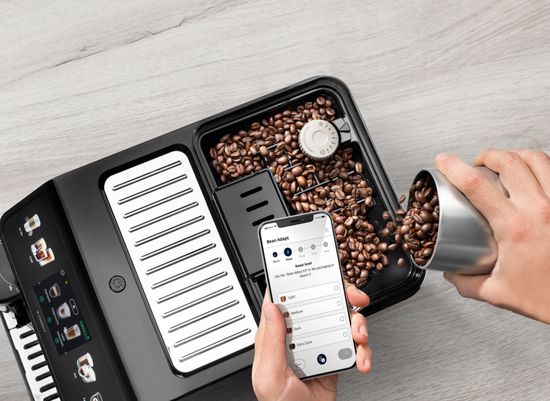
The coffee machine then prepares the espresso. After tasting, the user answers additional questions (Balanced, OK for me / Watery and weak / Too strong) and Primadonna Aromatic calculates the optimal settings. Unlike the Soul 610 series, which only controlled Bean Adapt via the app, the new Aromatic supports profile control from the panel. For this purpose, the 5-inch screen displays up to six ‘bean profiles’ in a separate interface tab, switching between them with a single touch. Unfortunately, activating Bean Adapt and adjusting the grinding degree via the menu increases the implementation period for new settings to 4 brewing cycles.
Of course, the new series also features a built-in Wi-Fi module and can connect to the internet via the Delonghi ‘My Coffee Lounge’ app.
Like the Soul, the Primadonna Aromatic also uses a removable two-piece coffee dispenser.

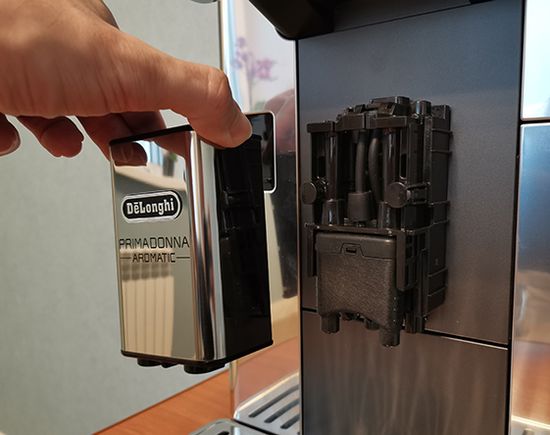
It’s typically cleaned using a special program and coffee oil removal tablets. However, particles stuck in the dispenser can significantly complicate cleaning. Rinsing the removable dispenser under running water is very simple and takes only a few minutes.
LatteCrema Cool milk jug
In addition to the main milk jug for traditional hot drinks, Delonghi ECAM 630.75.TSM comes with a second LatteCrema Cool milk jug for frothing milk at a temperature of 25-30°C.

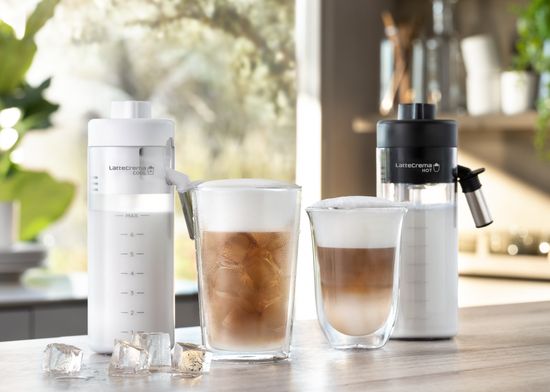
The coffee machine essentially mixes cold milk, steam, and air at specific settings to create cold froth.
This option allows the user to prepare cold milk-coffee drinks and milk drinks with cocoa, syrups, and ice cream without ice. Like the Hot milk jug, the Cool version supports adjustable milk froth height.
Some tips from Delonghi:
– LatteCrema Hot (dark lid) – frothing to a temperature of ~65°C, at least 3 grams of protein per 100 ml (cow’s milk has ~3-3.5 grams of protein per 100 ml), milk temperature 4-5°C, fat content up to 1.8%;
– Cold (white lid) – skim milk up to ~0.5%.
LatteCrema Cold can use alternative milks, such as coconut or almond, which is convenient for those with lactose intolerance.
Pressing the Cold button opens a separate tab with programs that always use the LatteCrema Cool jug:
– Cappuccino, Latte Macchiato, Caffe Latte, Cappuccino Mix and Flat White are similar to the ‘hot’ recipes of the same name, but with cold milk instead of hot. The machine also prompts you to add a few ice cubes;
– Cold Brew Cappuccino with cold, fluffy milk foam;
– Cold Brew Latte – cold milk + Cold Brew;
– milk (cold).
Cold Brew extraction
Cold Brew is a coffee drink with cold extraction, in which caffeine and flavor components are extracted using cold water.
This method was invented by Dutch traders, since hot water on ships during the voyage was very limited. This technology used coarsely ground beans that were soaked in cold water for up to 24 hours. The Dutch later introduced this technology to Japanese coffee drinkers, and this method has been used there for many centuries. Perhaps due to the sparse vegetation on the islands, hot water for brewing coffee was an unaffordable luxury at that time.
Of course, today the market offers many different designs that implement this technology.
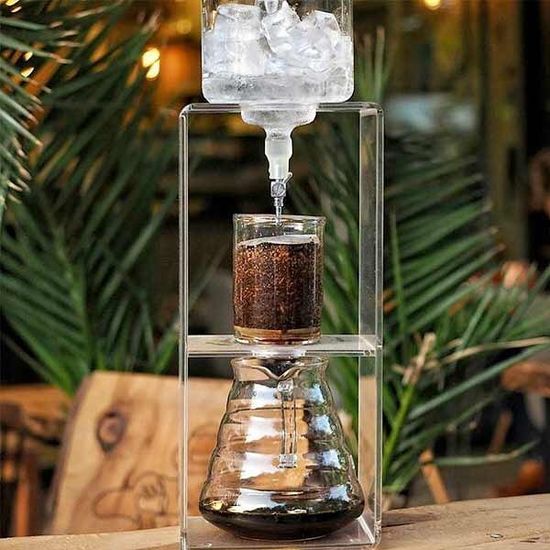
But only Jura and Delonghi implemented it in their premium coffee machines. The Swiss company compensates for the decrease in extraction efficiency due to the lower water temp by increasing the area of its contact with the coffee tablet. For this purpose, the piston head has a convex shape. The company calls this technology 3D Cold Brew.

Delonghi developed its own version in collaboration with the Specialty Coffee Association. Without passing through the thermal block, cold water from the water tank passes through the coffee tablet. Due to the low pressure and small portions, the duration of its passage is significantly increased. In turn, the longer contact time between the water and the coffee tablet compensates for the lower extraction temperature. The process lasts just over 3.5 minutes.
Cold extraction more fully reveals the sweet flavor components of the coffee, reducing its acidity and bitterness.
Cold Brew programs


Theу are selected from a menu activated by the Cold button to the left of the display. It contains:
– Cold Brew – a classic black сold brew coffee from 160 to 290 ml. The S, M, and L scale offers a selection of up to 205 ml, but the To Go mode with the Max modifier increases the volume to 290 ml;
– Cold Brew to Mix – a similar recipe with a fixed, reduced volume of 55-60 ml. The time of pouring water through a coffee tablet is 1:35. Essentially, this is a ‘cold’ version of espresso for cocktails. Moreover, the Delonghi My Coffee Lounge app offers many similar recipes. In fact, the coffee machine makes a Cold Brew shot as one of their ingredients;
– Cappuccino Cold Brew – a milk-based drink with black Cold Brew coffee and cold foamed milk on top, prepared using the LatteCrema Cool jug;
– Cold Brew Latte – a Cold Brew Cappuccino-like drink with the reverse sequence (medium frothed milk and coffee on top);
– Cold Brew Carafe – a series of 2-6 standard Cold Brew servings of fixed volume, 110-120 ml each. With a brew time of ~2 minutes 50 seconds per serving and 10 seconds for grinding, the machine brews 6 servings in ~18 minutes.
The coffee temp in the cup is roughly the same as the water in the machine’s water tank. Ice lowers the temperature by up to 5-10°C.
Furthermore, pressing the Cold button also opens a separate Coffee tab, the list of which contains recipes with the addition of ice cubes:
– Cold Brew, Cold Brew to Mix and Cold Brew Carafe are analogues of programs from the previous tab;
– Iced Coffee/Espresso/Americano – traditional extraction with the addition of ice cubes.
Programs
Like the Eletta Explore, the Primadonna Aromatic offers just under 40 modes and programs. However, the developers have made navigation quite simple with ‘Hot’ and ‘Cold’ buttons on the screen sides, and ‘Coffee’ and ‘Milk’ tabs on the desktop.

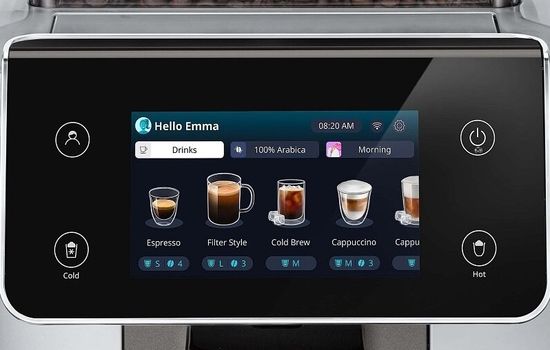
The coffee menu is activated in a separate tab by pressing ‘Hot’:
– Espresso – standard pre-wetting 1 sec;
– 2x Espresso – 2x water and 2 grams of coffee beans extra for any of the 5 coffee strength levels, pre-wetting 1 sec;
– Coffee – Lungo without pre-wetting;
– Espresso Lungo – Lungo with pre-wetting;
– Americano – classic sequence of espresso + water from a separate dispenser in the middle between the coffee spouts;
– Doppio+ – very strong espresso, long and intermittent pre-wetting mode, 14 grams of ground coffee, minimum volume is 80 ml;
– Filter Style (analogous to LONG) – extraction without pre-wetting at low pressure in pulse mode;
– Verlangerter – Austrian version Americano with a 1:1 coffee to water ratio by default;
– Long Black – a ‘reverse’ classic Americano (water + espresso on top);
– Coffee Carafe (To Go option) – 2 – 6 Lungo shots.
The main screen separately offers:
– tea at one of four selected temperatures;
– hot water – the water dispenser is located in the main dispenser between the coffee nozzles.
Milk-based programs

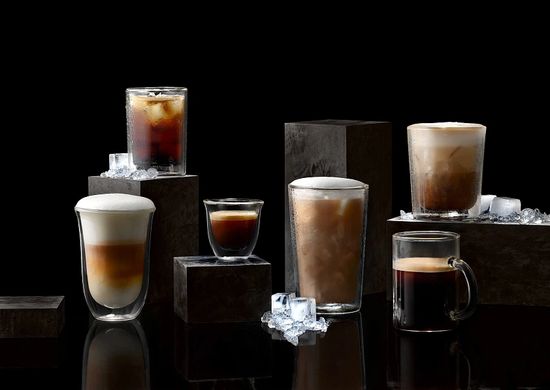
A menu with milk-based programs called ‘Milk’ opens after pressing the ‘Hot’ button and includes:
– Cappuccino – milk with espresso on top. The milk froth height is adjusted using the dial on the milk carafe. Furthermore, it can be changed even during preparation. The ‘My’ mode allows programming the milk/coffee ratio, with coffee ranging from 20 to 200 ml and milk up to 500 ml;
– Flat White – the classic sequence of coffee with milk on top;
– Cappuccino Mix – classic sequence – espresso + milk on top;
– Latte Macchiato – milk + espresso + milk foam;
– Cafe con Leche (Spanish coffee drink; it translates as ‘coffee with milk’) – classic sequence – espresso + milk on top;
– Caffe Latte – espresso + lots of foamed milk;
– Cappuccino+ is prepared from double espresso (Doppio+) and foamed milk;
– Cafe au Lait – French coffee drink; it translates as ‘coffee with milk’;
– Espresso Macchiato – espresso + a little milk foam on top;
– Cortado – espresso + a little hot milk on top;
– Galao – Portuguese coffee drink from one part espresso and three parts hot foamed milk;
– warm milk.
Unfortunately for outdoor coffee lovers, the dispenser limits the maximum cup height to 14 cm. This complicates choosing a thermos for the To Go mode, which is not included. Furthermore, it doesn’t support some programs, including Filter Style, and makes a maximum coffee valume is only 300 ml. For all To Go programs, the coffee machine offers five preset values ranging from 170 to 290 ml.
In addition, the Primadonna Aromatic does not have an optical bean hopper sensor, leaving the Maestosa as the only Delonghi model with this popular and useful feature.
Conclusions
Pros
~ € 1,630;
– superb coffee and fine milk foam;
– many programs;
– perfectly even grind with flat steel burrs and electronic grinder adjustment;
– Bean Adapt technology;
– Dual LatteCrema System with additional LatteCrema Cool milk jug for cold milk frothing;
– Cold Brew extraction;
– removable coffee dispenser;
– large 5-inch TFT touchscreen;
– Coffee Routine function.
Cons
– cup height up to 14 cm only;
– no optical bean hopper sensor.
The Italian company has once again successfully confirmed its status as one of the industry’s innovative leaders. Their new Primadonna Aromatic series with flagship ECAM 630.75 incorporates virtually all popular innovative technologies, including a large 5-inch TFT touchscreen, great electronic grinder and removable coffee dispenser, Bean Adapt and Cold Brew technologies, an additional LatteCrema Cool milk jug, and a Coffee Routine function. What’s more, the coffee machine costs less than € 1,650.
For comparison, the prices of semi-professional dual-hopper Jura GIGA 10 and ultra-innovative Jura Z10 reaches $ 5,500 and $ 4,300, respectively.
Primadonna Aromatic may be a bit inferior to its Swiss competitors, but a threefold price difference offsets even the impeccable reliability of the Jura brand. Overall, the superb price-quality ratio promises bright marketing prospects for the new flagship.
This video demonstrates the control panel and menu settings of the new flagship Delonghi Primadonna Aromatic coffee machine.