
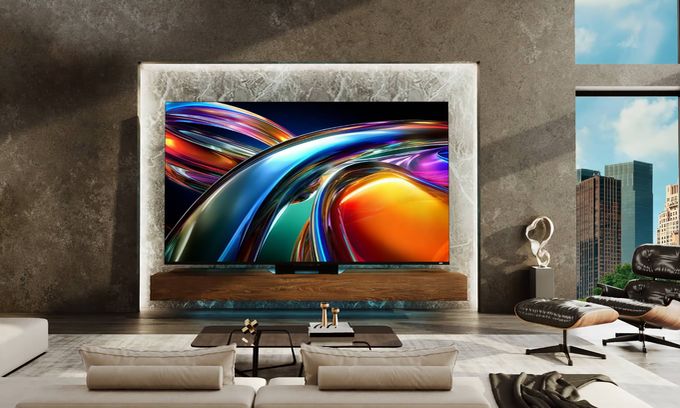


The myth of the inferior quality of Chinese home appliances has long been dispelled. Today, products from Heavenly Empire’s companies occupy leading positions in virtually all segments, including projectors, smartphones, vacuum robots, and others. Of course, Chinese manufacturers of high-tech TVs are also among the industry leaders. Today, Hisense and TCL compete successfully with South Korean Samsung and LG, Japanese Sony and Panasonic, and American Roku and Vizio.
Traditionally for industry leaders, Hisense annually updates its lineup with innovative series, and 2026 is no exception. This year, the Chinese giant focused its efforts on a new RGB LED backlit.
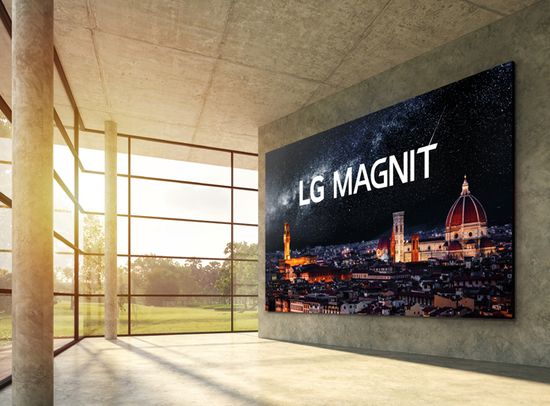
In fact, RGB LED is the industry term for new backlit, various versions of which companies call ‘micro RGB’ (Samsung), ‘micro RGB evo’ (LG), ‘RGB Mini LED’ (TCL and Hisense), or ‘TrueRGB’ (Sony). Of course, they have nothing in common with Micro LED panels, which offer fantastic quality at a fabulous price. They use millions of RGB LEDs (24.88 million@4K resolution) instead of an LCD layer, delivering phenomenal brightness, perfect black, and an ultra-wide color gamut. Moreover, panels are assembled from multiple modules that are connected magnetically. Accordingly, they have no size limitation. Unfortunately, they are monstrously expensive and are used primarily in outdoor advertising.

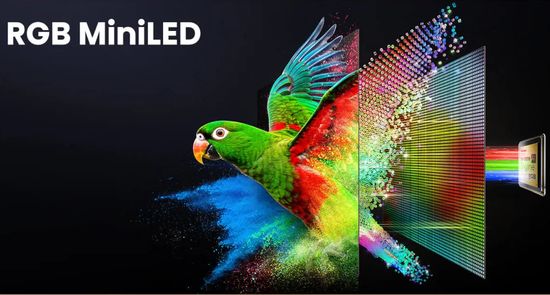
RGB LED is a new backlit, which uses a few thousand of red, green and blue LEDs and still requires an LCD panel in front.
Hisense 2026
The lineup includes:
– the 163-inch modular Hisense 163MX MicroLED with a four-color RGBY pixel architecture (additional yellow subpixel) that provides 100% coverage of the BT.2020 color space and the highest level of warm-toned realism. Pricing hasn’t been announced yet, but based on the brand’s prior ultra-premium 163-inch UX MicroLED models, industry analysts estimate the final cost will range from $ 100,000 to $ 110,000+;
– UR9S and UR8S (55–100″ and 4K@180Hz, 1080p@300Hz), and 116-inch 116UXS (or 116UXQ) with added cyan subpixel use RGB Mini LED. The 116UXS is the ultra-large, hyper-premium flagship TV.

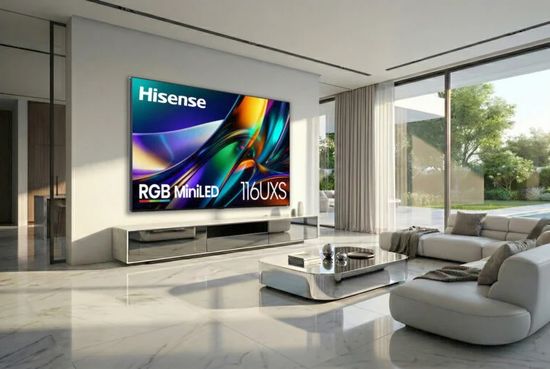
The smaller UX models feature traditional Mini LED backlit;
– UR7S and UR6S – Mini LED, matte coating.
Hisense UR9S vs UR8S
Both series cover 100% of the BT.2020 color gamut, feature anti-glare matte screens, 180Hz native panels, anti-reflective coatings, and Dolby Vision 2 support.
Differences:
– price (65″) – $ 1,700 to $ 2,000 depending on the region vs $ 1,800;
– 4,000 nits vs 3,500 nits peak brightness;
– local dimming zones (65″) – 980 vs 1,008;
– audio – Devialet-tuned 4.1.2ch system vs 2.1.2ch.
For reference, Devialet was founded in 2007 in Paris. Today, this popular French company produces a line of speakers (Phantom) and amplifiers (Expert);
– connectivity – 3x HDMI 2.1 ports and a DisplayPort 2.1 (USB-C) for PC gamers vs 4x full HDMI 2.1 ports;
– case thickness – 45 mm vs 52 mm;
– size – 65, 75, and 85 inches vs from 55 up to 100 inches.
UX series
– 3,584 local dimming zones (116″).
Moreover, Hisense claims over 40,000 individually addressable ‘color dimming zones’ where the red, green, blue, and cyan pixels are independently controlled;
– 5,000+ nits peak brightness;
– advanced subpixel architecture with additional yellow subpixel;
– heavier unibody metallic design.
TCL QM8L and Hisense UR9S
TCL QM8L vs Hisense UR9S (65-inch):
– $ 1,500 vs $ 1,700 – $ 2,000.
– backlit – Super Quantum Dot (SQD) Mini LED (improved Mini LED) vs RGB Mini LED (new tech);
– local dimming zones – 2,040 vs 980;
– color gamut (BT.2020) – 89.3% (independent tests) with Super Quantum Dots and Ultra Color Filter vs 100% with innovative RGB Mini LED backlit.

However, TCL claims 100% coverage for BT.2020 and 97.7% for DCI-P3 under standard conditions.
– peak brightness (65-inch model) – 5,000–6,000 nits vs 2,500–3,500 nits.
The TCL QM8L’s peak brightness in HDR mode exceeds 5,000 nits. When playing real-world content in HDR Movie mode, testing shows nearly 3,000 nits for an 18% white field and around 750 nits for a full-screen white field.
The Hisense 65UR9S’s standard brightness is approximately 600–800 nits (cd/m²) for SDR content. According to the company, the panel calibration can further increase peak brightness.
But overall, the TCL outperforms its competitor’s brightness. But to be fair, both models seem excessively bright. Therefore, reproducing very fine and bright details is unlikely to be a problem for the Hisense;
– anti-glare coating – high-quality anti-glare filter Ultra of WHVA 2.0 matrix vs anti-reflection & glare-free tech (excellent viewing angles, effectively diffusion direct light, glare absorption);
– interfaces – 4x HDMI 2.1 vs 3x HDMI 2.1 + universal USB-C port with video support (DisplayPort);
– gaming – 144Hz refresh rate vs 180Hz + dedicated Game Mode Ultra.
Gaming
For reference, Hisense Game Mode Ultra is a set of gaming optimizations that reduces input lag to <8ms and increases the panel refresh rate.
It includes:
– refresh rates – up to 170Hz or 180Hz depending on screen size (170Hz@65″, 180Hz@85″).
Today, companies are improving game smoothness by increasing native refresh rates using DLG (Dual Line Gate) or HSR (Hardware Super Resolution) technologies. These technologies employ specialized image processing, changing the way pixel rows are displayed on the screen.
DLG technology doubles the panel’s native refresh rate. To achieve this, DLG uses an alternating scan method in which two lines of pixels are displayed simultaneously instead of just one. In fact, it doubles the native refresh rate using alternating scanning, where two lines of pixels are displayed simultaneously. Today DLG is used, for example, in TCL and Philips models.

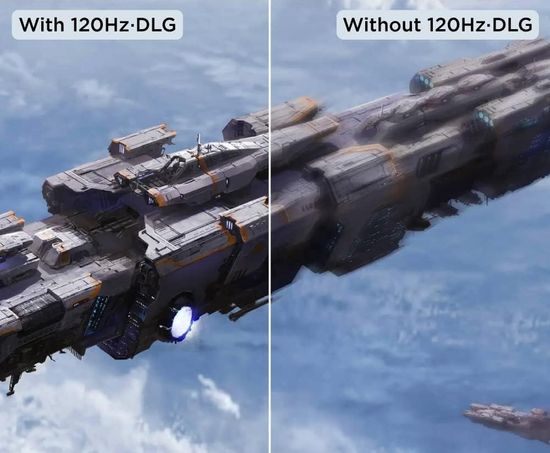
HSR also increases refresh rates by changing the way pixel lines are displayed on the screen. However, this technology calculates intermediate lines based on existing data instead of simply duplicating visible lines. This processing provides reproduction of a more complete image.
Therefore, HSR provides higher image quality compared to DLG. However, this interpolation can introduce a slight latency. While it will be imperceptible to most gamers, it could theoretically have a negative impact in competitive games;
– ultra-low input lag;
– ALLM (Auto Low Latency Mode) – auto switching to the fastest processing mode;
– VRR (Variable Refresh Rate) – supports AMD FreeSync and HDMI 2.1 VRR (adaptive synchronization technology to eliminate frame tearing and microfreeze in games);
– Turbo Mode / ALLM maximizes response times while retaining high dynamic range (HDR) metadata for a richer visual experience.
Conclusion
Hisense has once again successfully confirmed its status as one of the industry’s innovative leaders by introducing several superb series. Comparing the prices of the UR9S/UR8S with the 116-inch 116UXS is unlikely to be accurate due to their different screen sizes and price points. For reference, the 116UXS costs ~€ 17,000 in Europe and ~$ 35,000 in the US.
The UR9S and UR8S are roughly the same price. Depending on the region it varies from $ 1,700 to $ 2,000 for the 65-inch UR9S vs $ 1,800 for UR8S. The list of differences includes:
– 4,000 vs 3,500 nits peak brightness;
– 980 vs 1,008 local dimming zones (65″);
– Devialet-tuned 4.1.2ch system vs 2.1.2ch;
– 3x HDMI 2.1 ports + DisplayPort 2.1 (USB-C) vs 4x full HDMI 2.1 ports.
Overall, they offer a virtually identical quality-price ratio.
The results of comparing the Hisense UR9S with its traditional competitor, the TCL QM8L, are less clear-cut. The TCL is cheaper ($ 1,500 vs $ 1,700-$ 2,000), but the Hisense is better for gaming due to its higher screen refresh rate (170Hz/180Hz vs 144Hz). TCL QM8L offers higher peak brightness up to 6,000 nits and better dimming zone control with uniform display of HDR content, Hisense UR9S provides superb color accuracy.
The QM8L delivers better overall dark-room performance with minimal blooming or haloing around bright objects on dark backgrounds thanks to precise control of its local dimming zones. The Hisense UR9S has a superior matte anti-reflective coating that preserves great contrast even in a sunny room. Overall, their quality-price ratio is almost the same.
The video introduces the latest Hisense UR9S RGB MiniLED TV.
