
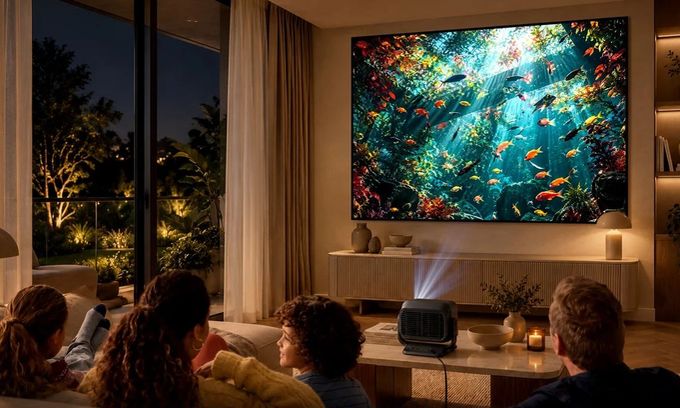


Of course, the JMGO brand is less well-known in US and European markets compared to, for instance, projectors from Epson, Sony, Hisense, BenQ, Optoma, or ViewSonic. But it’s very popular in Asia. For reference, the JmGO brand is owned by Shenzhen Holatek Co, Ltd. This Chinese technology company was founded in 2011, is based in Shenzhen, and specializes in the development and manufacturing of smart projectors and home electronics. Today, the company holds hundreds of patents in the field of projection equipment and is rightfully ranked among the industry’s innovation leaders.
Expanding the product lineup has long been one of the most effective tools for successful competition, and JmGO is no exception. The company introduces innovative models every year. In particular, the list of the most successful JMGO projectors includes:
– mid-focal Full HD triple-laser JMGO N1 / N1 Pro / N1 Ultra projectors (2023);
– compact mid-focal Full HD LED JMGO Picoflix (2024);
– UST (Ultra Short Throw) 4K triple-laser JMGO O2S Ultra (2025).
This year was no exception. In September 2026, at the IFA (Internationale Funkausstellung Berlin) trade show, the company unveiled the new JMGO Iris Series, comprising the Iris Ultra and Iris Ultra Max models.


These DLP projectors have become a real sensation on the market, as they deliver 4K@120 Hz. However, this aspect requires a brief explanation.
Pixel shift
In January 2016, Texas Instruments (TI) launched the first 0.67-inch DMD (DLP660TE) with a native resolution of (2,716 x 1,528), capable of displaying 8.3 million pixels via 2-way pixel shifting. Consequently, within a few years, the market was flooded with relatively affordable DLP projectors supporting 4K resolution with XPR (Expanded Pixel Resolution) tech. Naturally, companies marketed them as 4K models.
The technology’s operating principle is simple and elegant. A projector equipped with a Full HD DMD chip (Digital Micromirror Device with 2 million micromirrors) works as follows:
– it receives 8 million pixels of 4K content;
– splits them into two (or four) parts;
– sequentially displays two (or four) Full HD images, shifting them diagonally by half a pixel relative to one another.

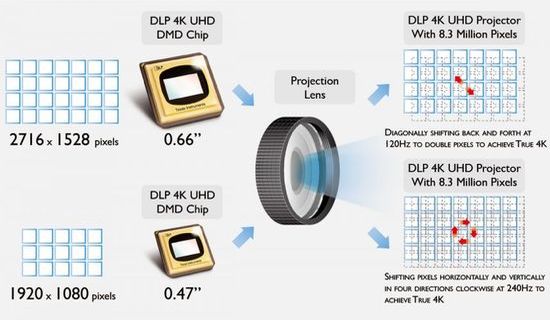
In reality, the projector displays only a single Full HD image at any given moment. However, due to the high frame rate, the human eye and brain perceive these four (or two) frames as a single, higher-resolution image. To be fair, the image quality of DLP XPR projectors currently falls short of models with native 4K resolution. But according to the company, the JMGO Iris series elevates performance to the level of native 4K projectors through innovative Dual-DLPC architecture and its JMGO HyperPulse Actuator. In fact, theу can be considered a fundamental breakthrough. Essentially, they deliver end-to-end 4K resolution at a 120 Hz refresh rate in DLP (Digital Light Processing) projectors for the first time. First and foremost, this is particularly important in gaming, movies, and sports.
The display control system based on the dual-DLPC architecture was developed by Texas Instruments (TI), while the HyperPulse Actuator is a proprietary technology from Shenzhen Holatek. Actuator shifts 480 times per second for 4K@120Hz.
Dual-DLPC and HyperPulse Actuator
The Dual-DLPC architecture utilizes two dedicated TI DLPC display controllers that work in parallel to drive a single Digital Micromirror Device (DMD) array. It’s designed to deliver lossless 4K@120Hz playback in premium laser projectors and is already featured in the JMGO Iris and XGIMI AURA 3 models.
In conventional projectors, a single DLPC controller processes the incoming video stream and manages the switching of millions of micromirrors on the DMD chip. Unfortunately, the bandwidth of a single standard chip is insufficient to simultaneously handle the massive data volume required for native 4K@120 fps playback.
Distributing these tasks across two controllers solves this problem.
Pros
– 4K@120Hz: The simultaneous operation of two controllers doubles processing power, enabling real-time handling of even demanding gaming and dynamic content from PCs or consoles via HDMI 2.1;
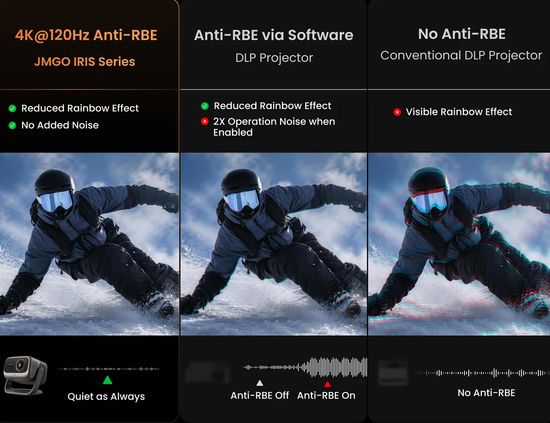
– Anti-RBE: Dual-DLPC hardware minimizes the ‘rainbow effect’ (color artifacts during rapid motion) by increasing refresh of up to 480 Hz and color-switching speeds.

– Low Latency: Stream splitting ensures full support for VRR (Variable Refresh Rate) and ALLM (Auto Low Latency Mode) technologies;
– enhanced HDR processing and Dynamic Iris: dual processors accelerate dynamic contrast algorithms (XGIMI DBLE tech) and iris control depending on the scene brightness.
The JMGO HyperPulse Actuator is a hardware-based pixel-shifting technology. It was developed by the company for its flagship JMGO IRIS series, which were unveiled at IFA 2026.
The actuator shifts the DLP chip’s micromirrors at a rate of 480 times per second, enabling the reproduction of detailed 4K@120 Hz.
Pros:
– support for 4K@120 Hz when paired with dual-DLPC display controllers ensures maximum clarity without trails and blurring in dynamic gaming;
– Anti-RBE;
– minimized judder – exceptionally smooth playback of fast-moving objects in games and movies.
JMGO Iris Series
But, of course, these innovations do not exhaust the benefits of the new series. Virtually all specs of the Iris series meet premium standards.
The next-gen MALC 6.0 Triple-Laser Engine delivers deep blacks, high daytime-ready brightness, and superb color accuracy.
Native contrast of JMGO Iris Ultra / Ultra Max reaches an unprecedented 7,000:1 / 10,000:1. Both models use a Dual-Iris system with 15-blade (6+9) design.

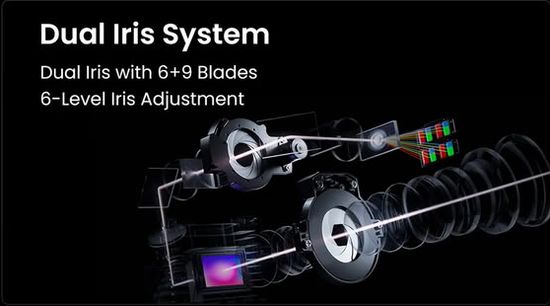
According to the company, it increases stray light suppression by 11.34% vs 12-blade (6+6) Dual-Iris design. Finally, 6-level iris adjustment adapts brightness and contrast to any content and viewing environments.
These models are ideal for gaming, movies, and sports:
– gaming – Variable Reference Rate (VRR), Auto Low Latency Mode (ALLM), 4K@120fps gameplay, and Dolby Vision support;
– movies and sports – 4K@120Hz Motion Estimation and Motion Compensation (MEMC) provides smoothness and clarity of dynamic scenes. Hardware-level Anti-RBE tech reduces visible rainbow artifacts.
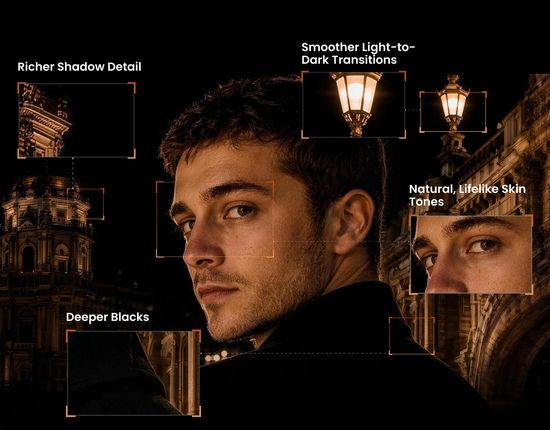
The JMGO IRIS Ultra and IRIS Ultra Max are the first to feature AI DBL (AI Dynamic Brightness & Contrast Control) tech. It offers:
– Frame-by-Frame Optimization – the projector’s AI algorithms analyze each content frame in real time, dividing it into distinct zones;
– Dual Iris System Synchronization – AI DBL works in tandem with the mechanical dual iris system; the AI precisely regulates light output by physically narrowing or widening the aperture based on the scene;
– Deep Blacks and Shadow Detail – in dark scenes, the technology eliminates stray light, boosting native contrast to a record-breaking 10,000:1 – sufficient to reveal detail even within shadows;
– Texture Rendering – unlike traditional dynamic contrast methods that can distort colors, AI DBL significantly enhances the rendering of skin tones and facial features.

IRIS Ultra Max vs IRIS Ultra
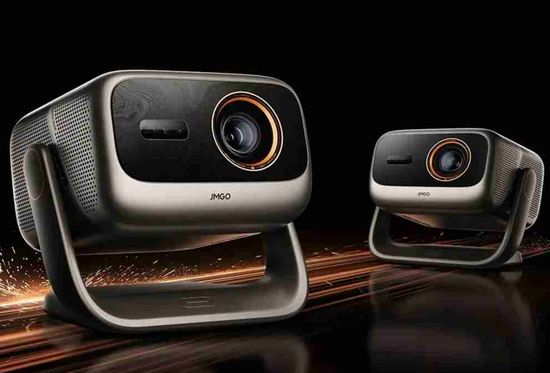
The models share an identical design and dimensions (308 × 230 × 274 mm), but the Ultra Max is slightly heavier (6.95 vs. 6.7 kg).

Both models
– 4K UHD & RGB triple laser;
– 4K@120Hz Output;
– Hardware-level Anti-RBE;
– Dual-iris with 6+9 blades;
– AI DBL;
– Google TV 5.0;
– IRIS – Dual IRIS F2.0-F7.0;
– High Refresh Rate – 4K@120Hz;
– Lens Shift ±130%V / ±53%H;
– Throw Ratio – 0.88~1.7:1.
Differences
– $ 3,000 vs $ 1,900;
– 6,500 vs 4,500 ISO Lumen;
– 10,000:1 vs 7,000:1 Native contrast;
– 3-in-1 Optical system;
– Smart Gimbal Motion ±150%V / ±360%H vs Gimbal ±160%V / ±360%H.
The JMGO IRIS Ultra Max features a motorized AI-powered smart gimbal, while the standard IRIS Ultra uses a manual setup/gimbal mechanism.
JMGO IRIS Ultra Max:
– motorized AI gimbal suppors 360° pan and 150° tilt rotation;
– offers automated image positioning, AI screen fitting, and spatial image memory to adjust and orient the picture without moving the projector itself;
IRIS Ultra:
– manual gimbal design combined with optical zoom and lens shift;
– manual adjustments to screen or the desired surface.
To be honest, a price difference of over $ 1,000 (more than 30%) seems a bit excessive. Of course, the extra 2,000 ISO lumens, 30% boost in native contrast, and AI-based smart gimbal are impressive. But the 4,500 ISO lumen and 7,000:1 native contrast ratio of the more affordable IRIS Ultra model are actually excessive in most situations. That said, the Ultra Max model is a perfect choice for well-funded perfectionists.
JMGO MALC 6.0
The IRIS series utilizes the new 6th-gen MALC 6.0 (Microstructure Adaptive Laser Control) optical unit, which the company calls RGB Pure Triple Laser.

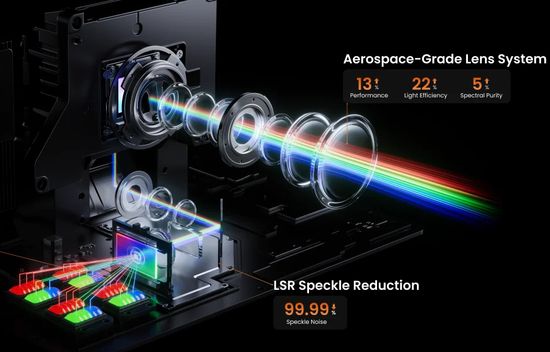
According to the company, it delivers a dramatic improvement in brightness, clarity, and refresh rate.
Pros:
– Brightness: the top-tier IRIS Ultra Max delivers a light output of up to an unprecedented 6,500 ISO lumens.
As known, ambient light makes an image look dull and faded.

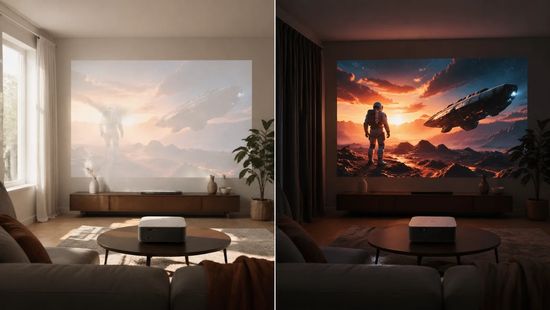
The projector’s high brightness compensates for this. Therefore, acceptable quality with saturated colors in low-brightness projectors is achieved through careful darkening of the room. Of course, heavy curtains or night viewing can solve this issue, but these limitations reduce the projector’s usability. The JMGO IRIS series, with its superb brightness of 6,500 and 4,500 ISO lumens, ensures rich colors even in ambient daylight;
– Cinematic color: coverage of up to 110% for the BT.2020 color space ensures the reproduction of rich, accurate colors without distortion.
For reference, BT.2020 (or Rec. 2020) is the widest standard from the International Telecommunication Union (ITU), covering about 75% of the human visible spectrum;
– 4K@120Hz and gaming: the optical engine supports 4K@120Hz along with Dolby Vision, VRR (Variable Refresh Rate), and ALLM technologies, minimizing input lag and eliminating screen tearing during fast-paced gaming on consoles like the PS5 and Xbox Series X;
– Speckle and RBE reduction: an advanced Laser Speckle Reduction (LSR) system and Anti-RBE technology (eliminating the ‘rainbow effect’) are implemented at the hardware level.
The IRIS Ultra Max covers up to 110% of the BT.2020 color gamut with a color accuracy of ΔE ~ 0.7, matching modern premium standards. In fact, the projector does not require any additional calibration.
Optical system and connections
The JMGO IRIS Ultra Max features a 3-in-1 optical system comprising:
– 0.88–1.7:1 Optical Zoom – allows for resizing the projected image without the loss of quality or pixels associated with digital zoom, which degrades resolution;
– Four-Way Lens Shift – enables vertical image shifting of up to ±130% and horizontal shifting of up to ±53% without moving the projector or distorting the image geometry.
As known, virtually all modern projectors use digital keystone correction, stretching and cropping the image. Unfortunately, this results in a loss of detail and the appearance of artifacts. The optical lens shift physically repositions the lens elements, maintaining image quality without digital distortion;
– AI-Powered Gimbal – an AI-controlled stand capable of rotating 360° horizontally and tilting 150° vertically.

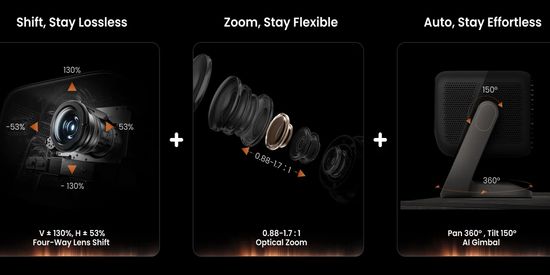
In addition, model supports AI Screen Fitting (automatically matches screen borders and aligns the projected image) and AI Spatial Image Memory (saves and restores settings for different surfaces). This combination enables precise adjustment of the screen’s position, size, and geometry via the remote control. Simply put, the model can cast an image at various angles onto any wall or ceiling, automatically adapting the picture to the projection surface.
IRIS Ultra offers similar functionality without the AI-powered gimbal.
Naturally, the other platform components are also premium. The Iris models feature two full-fledged HDMI 2.1 inputs for 4K@120 Hz signals, support ARC and CEC for connecting a soundbar or AV system.
In addition, the projectors utilize Wi-Fi 6 and Bluetooth 5.4 for wireless connectivity, are equipped with USB 3.0 and a standard 3.5mm audio jack.
But most importantly, the models come with an integrated, full-fledged Google TV system, which effectively solves the content issue.
JMGO IRIS Ultra Max vs IRIS Ultra vs XGIMI AURA 3 Max
Today, the Dual-DLPC architecture is implemented in the JMGO IRIS Ultra Max / IRIS Ultra and the XGIMI AURA 3 Max. Therefore, comparing them is highly relevant.
JMGO IRIS Ultra Max vs IRIS Ultra vs XGIMI AURA 3 Max
– price (MSRP) ~ $ 3,500 vs 2,400 vs $ 3,500.
The exclusive early-bird pricing for the IRIS Ultra Max is $2,999 (MSRP – $3,499), and $1,899 (MSRP – $2,399) for the IRIS Ultra version;
– portable long-throw vs portable long-throw vs UST (ultra short throw);
– brightness – 6,500 vs 4,500 vs 5,700 ISO lumens;
– native contrast – 10,000:1 vs 7,000:1 vs 8,000:1;
– optical adjustment – Zoom + Lens Shift + AI Gimbal vs Zoom + Lens Shift vs Fixed UST;
– throw ratio – 0.88–1.7:1 (100″@2,0-3,9 м) vs 0.88–1.7:1 (100″@2,0-3,9 м) vs 0.163:1 (100″@12,8 см).

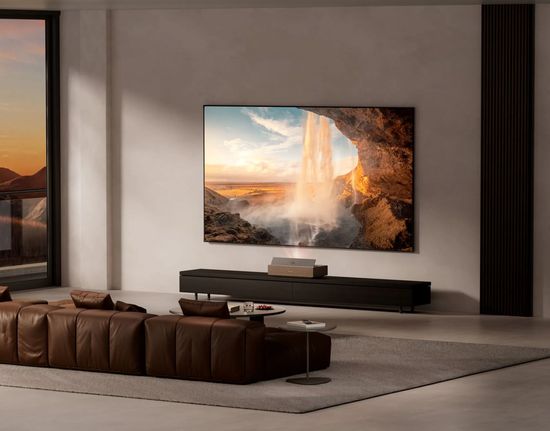
Of course, the UST design is a significant advantage for the XGIMI model, radically simplifying projector placement near the wall without floor cables or complex ceiling mounts;
– audio system – 2x 12.5W (Dolby Audio and DTS) vs Harman Kardon (2x 20W tweeters and 2x 20W woofers, Dolby Atmos and DTS);
All models:
– Resolution & Refresh – 4K@120Hz;
– Light Source – triple laser;
– Dolby Vision@4K@120Hz;
– built-in OS – Google TV for global market;
– VRR / ALLM.
In fact, new DLP models featuring Dual-DLPC architecture aim to challenge traditional native 4K projectors without pixel-shifting. This category primarily includes LCoS-based Sony SXRD or JVC D-ILA models. Their prices start in the $ 5,000–$ 6,000 range. For instance, the ‘entry-level’ Sony VPL-XW5000ES is priced at $6,000, which is nearly double the cost of its new DLP competitors.
Conclusion
In fact, the JMGO Iris series and XGIMI AURA 3 Max are poised to become the major sensations of 2026 in the DLP projector segment. According to the developers, the image quality of these models has reached the level of native 4K for 4K@120 Hz signal for the first time with the Dual-DLPC tech from TI. Moreover, the JMGO models utilize the innovative HyperPulse Actuator, which shifts the DLP chip’s micromirrors 480 times per second, enabling the reproduction of more detailed 4K@120Hz image.
Of course, consumers will make the final judgment. However, if the claimed 4K@120Hz image quality truly rivals that of significantly more expensive projectors with native 4K resolution, then manufacturers of LCoS projectors face a challenging future. Currently, the price of the entry-level Sony VPL-XW5000ES stands at $6,000, which is double the cost of the new DLP projectors featuring Dual-DLPC tech.
Moreover, Dual-DLPC and HyperPulse Actuator don’t exhaust the list of innovations in the new JMGO. The MALC 6.0 light sourse, 3-in-1 optical system and AI-powered gimbal in IRIS Ultra Max, AI DBL (AI Dynamic Brightness & Contrast Control) tech and Dual-Iris system make make these projectors the most innovative in this segment.
This video is an unboxing of the JMGO IRIS Ultra Max projector.
