
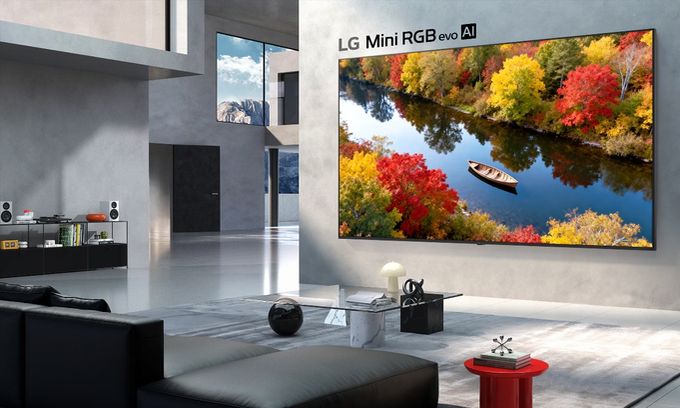


As one of the industry’s innovation leaders, LG expands its TV lineup every year, and 2026 is no exception. In particular, the South Korean giant unveiled several new series of OLED TVs, including the B6, C6, C6H, and G6. The C6H and G6 series feature LG’s innovative ‘Hyper Radiant’ tech, which incorporates ‘Primary RGB Tandem 2.0’ tech and ‘Brightness Booster Ultra/Pro.’ In addition, the flagship G6 series features an enhanced, premium anti-reflective coating with an unprecedented 0.5% reflection rate, and a heat sink for more efficient cooling. Furthermore, these TVs incorporate a ‘Flush Fit Gallery’ design, allowing for gapless wall mounting.
However, the company has not overlooked the LCD segment, and has additionally introduced the Micro RGB evo and LG Mini RGB evo series (models MRGB95/96 and MRGB87). These were first announced and showcased at CES 2026 in Las Vegas in January. Their official presentation took place in June, followed by an official announcement in August, and finally, in September, the flagship models were demonstrated at the IFA 2026 exhibition in Berlin.
Undoubtedly, the innovative backlit has become the main bonus of these series. A year ago, the RGB miniLED tech in the Hisense 116UX was a sensation at CES 2025. Today, virtually all industry leaders have introduced their own versions of this tech, including:
– LG Micro RGB evo;
– Samsung Micro RGB;
– Sony True RGB (or Sony General RGB LED);
– Hisense RGB mini-LED (1st gen, 2025) and RGB MiniLED evo (2nd gen, 2026).
The LG 2026 TV lineup includes Micro RGB evo, featuring technology of the same name, and Mini RGB evo, which utilizes proprietary Tandem LED tech.

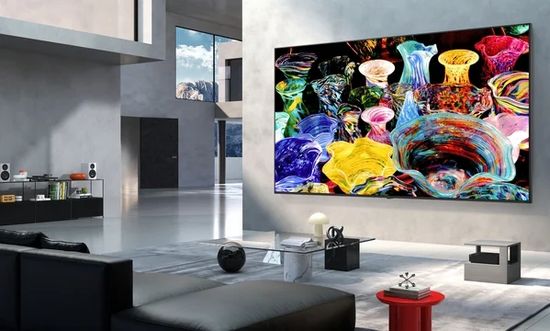
MicroLED vs Micro RGB
Given the abundance of new terminology resulting from the innovation boom in the high-tech TV segment, even a simplified classification can be useful. In particular, Micro/Mini RGB technologies have nothing in common with MicroLED panels. In reality, they are traditional LCD TVs featuring a significantly enhanced version of LED backlit. Unlike them, MicroLED panels use self-emissive inorganic diodes, each of which functions as an independently controlled pixel.
Key features:
– tiny inorganic LEDs, measuring only a few microns, require no external backlit or color filters;
– ideal black (‘Black Seal’) are achieved simply by turning it off. Furthermore, a special coating blocks external light reflections, resulting in a native contrast ratio of up to 22,000:1;
– exceptional color purity (‘Ultra Chroma’) and a wide color gamut (free from distortion) are achieved because the diodes emit the primary RGB colors directly.
Currently, fabulously expensive MicroLED panels deliver stunning image quality and are used primarily for advertising purposes. Samsung is the main driving force behind the development of this tech. This year, the company introduced a modular MicroLED display called ‘The Wall All-in-One’.

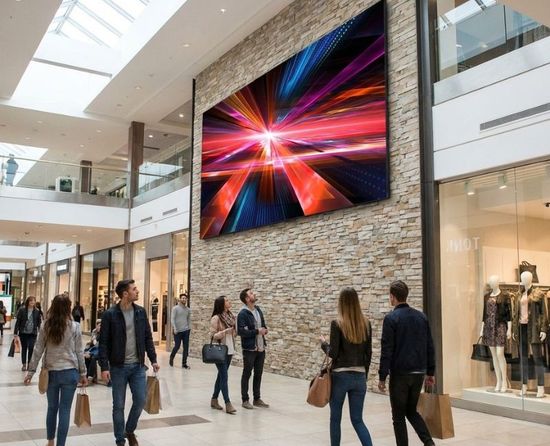
It comes with an integrated control unit, wall mounts, speakers, and a decorative frame. Unfortunately, its price tag effectively keeps it out of the mass market. For reference, the costs are (LHA15MMFRHS/EN):
– 110″, 2K / Full HD: $ 70,000 – $ 80,000 in the USA, and £ 34,500 / € 35,990 in Europe;
– 146″ (2K / Full HD): $ 106,000 – $ 140,000 and £ 90,000;
– 146″ (4K UHD) – $ 220,000 / £ 120,000.
To be fair, at InfoComm 2025, AWALL unveiled a 75-inch CoB MicroLED display, which currently costs ‘only’ $ 16,250–$ 16,600. Even so, even this price remains quite high for the mass market.
Mini/Micro RGB evo
Images on LG Mini RGB evo and LG Micro RGB evo televisions are generated using a hybrid LCD architecture. Instead of conventional white/blue backlit, these displays employ three-color matrices composed of miniature LEDs. Both technologies remain LCD panel. The light from the backlit passing through diffuser layers, a liquid crystal matrix, and color filters or control layers.

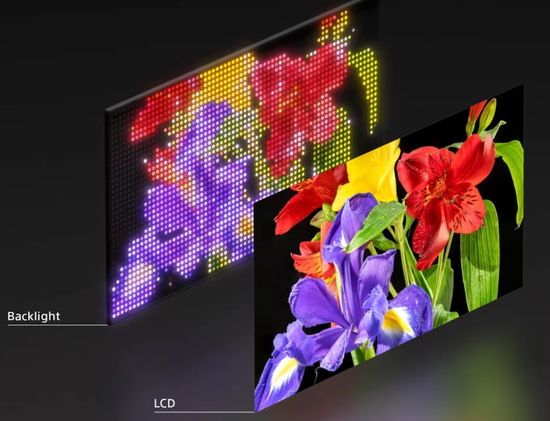
The key differentiators are the size of the LEDs and the control accuracy.
LG Mini RGB evo (MRGB85 / MRGB9M):
– LEDs have size between 100 and 400 microns;
– unlike standard blue/white mini LEDs, this new panel utilizes separate sources for the three primary RGB colors;
– RGB backlit clusters illuminate specific screen areas with the required color spectrum;
– the liquid crystal matrix and a processor (utilizing features such as ‘Precision Dimming’) refine the image shape and contrast, delivering 100% color gamut coverage and high brightness levels.
Micro RGB evo (MRGB95):
– this tech employs even smaller RGB LEDs, measuring less than 100 micrometers per sub-pixel;
– thanks to the smaller size and denser arrangement of the LEDs, the display features thousands of local dimming zones (powered by ‘Micro Dimming Ultra’ tech);
– microscopic red, green, and blue clusters produce a highly pure spectrum, eliminating the light loss typically associated with standard color filters.
– a powerful α11 AI Processor Gen3 manages the brightness of each individual micro-zone on a frame-by-frame basis;
– displays in this class reach a peak brightness of 2,000–4,000 nits and are certified for an extended color gamut covering the BT.2020, DCI-P3, and Adobe RGB color spaces.
Thus, in these technologies, the LEDs do not function as individual image pixels, but rather serve as an advanced backlight for the classic LCD panel.
LG Primary RGB Tandem OLED vs Tandem LED
‘Primary RGB Tandem’ represents an evolution of OLED (Organic Light-Emitting Diode) displays. The ‘Tandem LED’ (or ‘Mini RGB evo’) is used in LCD TVs with backlit.
Tandem OLED
This tech uses a multi-layered architecture of self-emitting diodes. For example, the 4-stack structure developed by LG Display has four layers, compared to the one or three layers in conventional designs. Two layers of blue emitters work in tandem with separate layers of red and green elements.

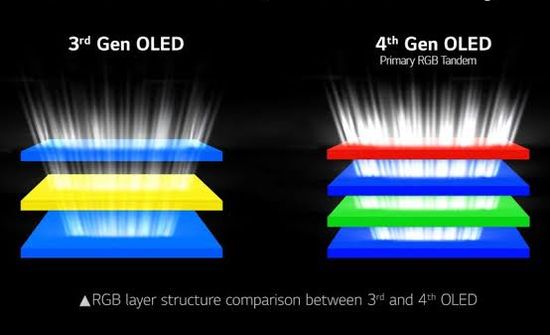
The use of direct emission eliminates losses caused by filtering, resulting in higher brightness and greater color purity. Distributing the load across additional layers allows for a peak brightness of over 1,700 nits, reduced power consumption, and a significantly longer panel lifespan by slowing down the rate of pixel burn-in.
Tandem LED (Mini RGB evo)
The LCD matrix with pixels is illuminated by layers of LEDs (Mini/Micro LED). В частности, LG’s Mini RGB evo utilizes multi-layered RGB backlit structures to expand the color gamut. В отличие от Tandem OLED, the light is generated by a rear backlit unit, while a layer of liquid crystals modulates it to produce color. This tech provides high overall brightness on large screen sizes and no risk of organic material burn-in. But its black levels are less deep than those of OLED. Their contrast traditionally depends on the number of local dimming zones.
Simplified comparison (Tandem OLED vs. Tandem LED)
– OLED pixels vs an LCD/LED matrix with a multi-layer backlit;
– perfect black vs potential ‘blooming’ (halo effect) around small, bright objects;
– multiple stacked RGB-OLED layers within each pixel vs a stack of backlit LEDs positioned behind the LCD layer;
– high brightness, long lifespan, and pure colors vs ideal for very large screen sizes.
Triple and Double Color Coverage
Manufacturers typically specify color gamut coverage for only a single standard. For its Micro/Mini RGB series, LG highlights full coverage across multiple standards.

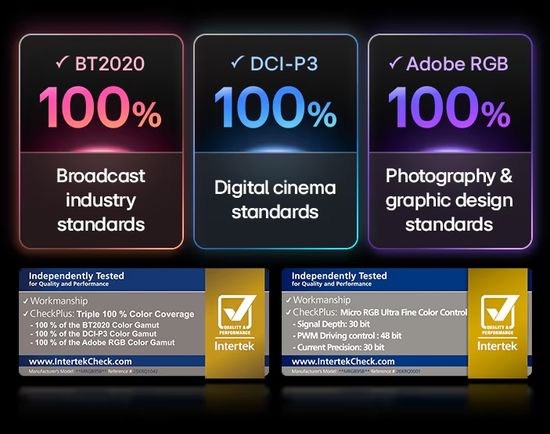
This statement requires clarification.
In theory, color standards might be expected to encompass one another. However, because they were developed for different purposes, their boundaries do not align. They cover different areas and are offset relative to each other:
– BT.2020 is designed for next-generation HDR content. This gamut encompasses virtually the entire spectrum of deep hues;
– sRGB / Rec.709 is the most limited standard, used for HD television, the internet, and most standard video content;
– DCI-P3 (digital cinema) was developed for digital movie theaters and has become the standard for HDR content. It’s significantly expanded toward the red and green ends of the spectrum;
– Adobe RGB (professional photography and printing) is shifted toward saturated green and blue-green (cyan) tones. While broader than sRGB, it extends in a different direction than DCI-P3.

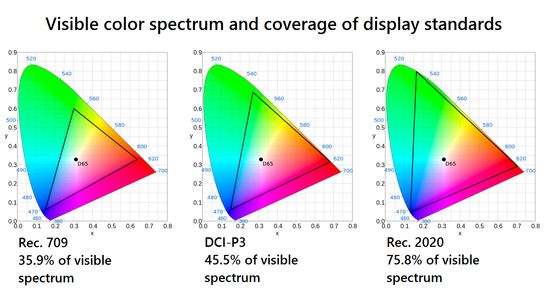
Consequently, a display might offer 95% coverage of the DCI-P3 gamut while only covering about 80–85% of Adobe RGB, due to a lack of deep emerald and turquoise tones. Conversely, a professional monitor designed for photography with 100% Adobe RGB coverage might fail to reproduce the pure, deep reds required for 100% DCI-P3 coverage in cinema.
Essentially, LG’s claim of ‘double or triple 100% coverage’ means that the color gamut of the display encompasses the peaks of all three standards. For the viewer, this translates to perfect color accuracy in any mode, including watching movies, playing retro games, viewing standard YouTube videos, or looking at photographs.
This advancement is made possible by the use of pure RGB LED emission, free from unwanted distortions or color crosstalk.
Micro RGB evo (MRGB95) vs Mini RGB evo (MRGB85 / MRGB9M)
Both series feature Motion Booster 330 with refresh rate of up to 330 Hz (smooth motion and sharp imagery during fast-paced scenes), and support for VRR and AMD FreeSync Premium (to reduce screen tearing and latency). All models run on webOS 26.
Differences:
– price (75″): $ 3,600 – $ 5,000 / £ 6,300 vs £ 1,300 – £1,350;
– brightness: 3,000 – 4,000 nits vs 1,000 nits;
– color gamut: 100% BT.2020, DCI-P3, and Adobe RGB vs 100% DCI-P3 and 100% Adobe RGB;
– diode size: up to 100 µm vs 100–400 µm;
– processor: α11 AI Processor Gen3 with Dual AI Engine support vs α11 / α8 AI Processor Gen3 with an enhanced NPU (featuring standard AI-based dimming and color control);
– independent control for each LED (sub-pixel) vs a multi-layered structure (Tandem LED tech).
This patented tech combines multiple RGB color layers (or Tandem LED backlit layers), ensuring high brightness and durability;
– element arrangement: separate (Red, Green, and Blue placed side-by-side) vs layered (RGB elements stacked on top of one another);
– pixel-level precision vs local dimming zones (Precision Dimming);
– screen size: 75″, 86″, 100″ vs 55″, 65″, 75″, 86″;
– wireless ZeroConnect box for MRGB9M vs ‘Flush-fit’ design;

– audio: 2.2ch 40W vs 2.0ch (down-firing) 20W.
Both series support Dolby Atmos, Virtual 11.1.2ch surround, AI Sound Wizard (audio profiles), AI Sound (audio processing), Clear Voice Pro (speech clarity), WOW Orchestra (sync with an LG soundbar), and LG Sound Sync (external audio).
Overall, Micro RGB is a more expensive and technologically advanced configuration that provides pinpoint, near-pixel-level control over brightness. This minimizes the ‘blooming’ effect around bright objects set against a dark background and ensures maximum, professional-grade color accuracy.
Conclusion
This year, the South Korean giant has delighted its brand’s fans. The C6H and G6 series, featuring Hyper Radiant technology (Primary RGB Tandem 2.0 panel and the Brightness Booster Ultra/Pro function), have successfully expanded LG’s lineup of OLED TVs. Meanwhile, the LG Micro RGB evo series represents a worthy evolution of the company’s LED family. It offers unprecedented brightness of up to 4,000 nits, contrast levels approaching those of OLED, and 100% ‘triple color coverage’ across the BT.2020, DCI-P3, and Adobe RGB color spaces.
With a price range of $ 1,000 to $ 1,500 for the 65-inch model, the Mini RGB evo series offers a superb price-to-quality ratio and may well be a contender for a place on the bestseller lists.
The video introduces the latest LG Micro RGB evo AI TV.
