
The idea of a pocket TV has been on the market for a long time. But its implementation only took place in July 2012 at the Mobile World Congress, where Samsung introduced the Galaxy Beam i8530 with a built-in DLP projector.
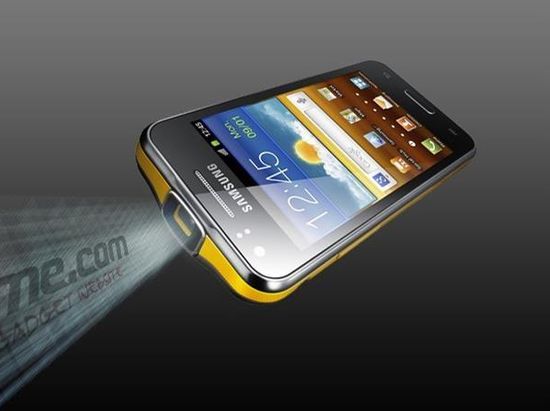
The hybrid was enthusiastically received by progressives. The excitement around the new product peaked in 2020, when the list of popular models included Blackview MAX 1, Moviphone, Qantum V, Movi and others. The marketing prospects for phone-projectors seemed cloudless. However, the consumer boom ended very quickly for several quite objective reasons. First, the built-in projector increased the phone price by $ 300-$ 400. As a result, buying a phone and a pico projector separately was 20-30% cheaper. Second, battery capacity rarely exceeded several thousand mAh, and draining it in projector mode was an unaffordable luxury. As a result, hybrids virtually disappeared from the market.
Phone-projectors
But a few years ago, the explosive growth in popularity of rugged phones radically changed the situation. As known, they were designed for camping, so their relatively large size and weight weren’t critical. This aspect eliminated battery limitations. As a result, companies were able to equip their models with batteries with monstrous capacities. For example, the Tank 3 Pro’s battery capacity reaches 23,800 mAh. Moreover, the Oukitel WP100 Titan’s battery stunned the imagination with an unprecedented 33,000 mAh. Of course, the increased power consumption in projector mode became unimportant. As a result, the rugged phone-projector segment is once again booming.
Chinese Unihertz 8849 Tank pioneered the reincarnation of phone-projectors by introducing the first rugged phone-projector Tank 2 in 2023. Today this series already includes up to 10 models that successfully compete in the market. The company annually expands their product range and 2026 was no exception. This year, Unihertz introduced the Tank X and the flagship Tank 5/5 Pro.
Both models offers:
– 17,600mAh Battery + 120W Fast Charging, full in 70 / 90 min full charge;
– 16GB RAM + 16GB virtual + 512GB ROM (UFS 3.1 vs expandable to 2TB UFS 4.0 in Tank 5);
– dual-frequency GPS (L1 + L5), Bluetooth 5.4, Wi-Fi 6 (Wi-Fi 7 in TANK 5);
– 120-inch image size.
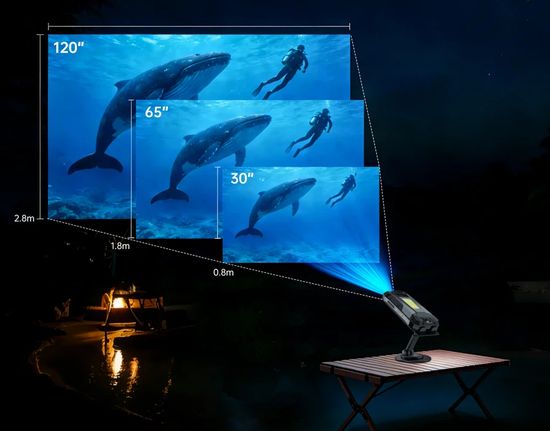
– 1,200-lumen camping light.
The list of differences is significantly longer.
Tank X vs Tank 5
– $ 670 vs $ 900;
– CPU.
MediaTek Dimensity 8200 4nm Octa-Core Processor vs MediaTek Dimensity 9400e, Flagship 3nm octa-core, AnTuTu 2.3M+.
The MediaTek Dimensity 9400e is a higher-end flagship processor for premium devices.
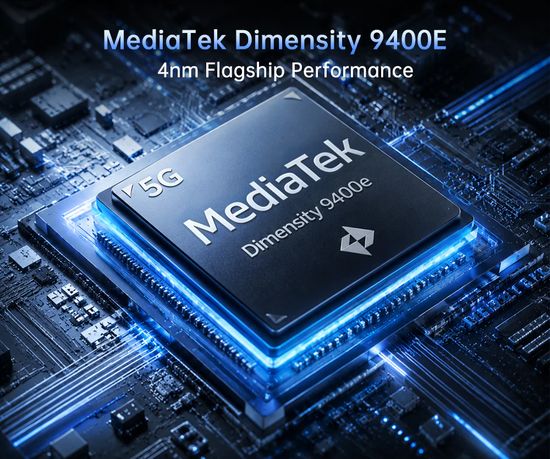
Dimensity 8200 belongs to the upper-mid-range. 9400e offers nearly double the multi-core processing power, a superb GPU for 3D gaming, supports faster RAM and next-generation Wi-Fi 7.
Key differences:
– 2022 (upper-mid) vs flagship 2024+ (premium);
– TSMC 4nm vs TSMC N3E (3nm);
– Geekbench 6 (Multi) ~3,900 points vs ~7,500+ points;
– GPU/Graphics – Mali-G610 MC6 vs ‘Immortalis’ G925 MC12;
– RAM support LPDDR5 vs LPDDR5X (up to 8533 Mbps);
– wireless tech – Wi-Fi 6E vs Wi-Fi 7.
Architectura:
– Cortex-A78 power cores + Cortex-A55 efficiency cores vs ultra-powerful Cortex-X cores and Cortex-A720s for maximum performance (next-gen architecture);
– moderate gaming vs ‘Immortalis’ GPU on the 9400e handles heavy ray tracing and high-frame-rate gaming with ease;
– upgraded NPU of the 9400e is designed for generative AI tasks and includes modern upgrades, including Bluetooth 6 and Wi-Fi 7 connectivity;
Other specifications:
– 6.78″ FHD+ (1,920 x 1,200) 120Hz Eye-Care Display, 750 nits brightness vs upgraded to 6.73″ 3K (2,880 x 1,800 or 3,000 x 2,000) AMOLED 120Hz ultra-bright display (up to 3000 nits);
– 50MP main + 64MP night vision + 8MP telephoto + 50MP front vs 50MP main + 50MP telephoto + 50MP night vision + 32MP front;
– dual nano SIM cards vs (eSIM + nano SIM) or dual nano SIM with Android 16;
– USB Type-C (2.0) vs USB-C to Monitor/TV (DP 1.4 Alt Mode).
Standard USB-C (2.0) is designed for basic charging and low-speed data transfer up to 480 Mbps. DisplayPort (DP) Alt Mode is designed for high-bandwidth data of video.
Projectors
Of course, a pocket device’s built-in projector can’t deliver cinematic quality. But understanding the relationship between image quality and its key specs will help avoid disappointment. Brightness, resolution and contrast are the primary specs.
Ambient light makes the image appear dull and faded. Brightness compensates for this influence. Simply put, a low-brightness projector can only provide acceptable quality in a dark environment.
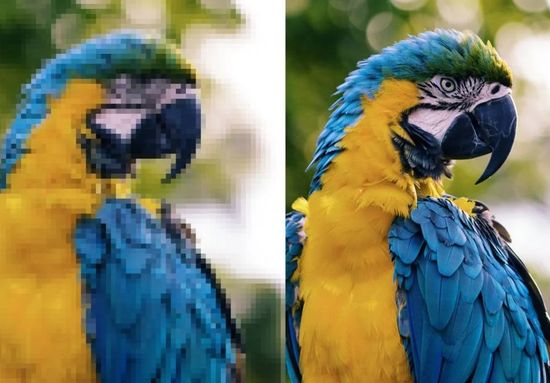
Resolution defines the sharpness and image detail. Its influence increases with image size. An image with a relatively low resolution appears sharp enough on a small smartphone screen, but becomes blurry when zoomed in. Moreover, at close viewing distances, the pixel grid begins to become visible.
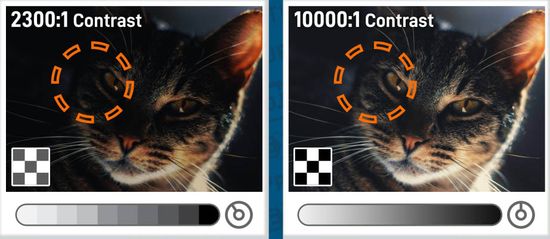
Contrast ensures detail in dark areas of the frame and gives the image depth.
Brightness or Lumen Output (ANSI lumens):
– low – up to 1,500 (dark rooms);
– mid – 2,000 – 3,000 lumens (dimming lighting);
– high – 3,500+ lumens (daylight).
Resolution:
– 1080p (Full HD) – the baseline for screens up to 100″;
– 4K UHD (3,840 x 2,160) – Home Theater.
High resolution requires sufficiently high brightness.
Today, companies use several types of contrast, including native (from several hundred to several thousand to one), FOFO (Full On / Full Off), and dynamic (iris and AI-based algorithms). Native contrast is the most ‘honest’ and informative.
Tank X and Tank 5 use virtually identical projectors:
– 220-lumen DLP Projector, 1,920 x 1,080p, ± 40° of vertical distortion correction, auto-focus 0.5-3.0 meters vs 220-lumen DLP Projector, upgraded to 2K projector (2,048 x 1,080 native resolution) 4 meter laser autofocus and ± 45° auto-keystone correction.
220 lumens brightness, Full HD resolution, 400:1 native contrast, 120 inches diagonally image size, laser autofocus and ±45° auto-keystone correction make them the best in the built-in projector segment.
Conclusion
Of course, the specs of the built-in projectors in the 8849 Tank X and Tank 5 are very modest, and their use as a Home Theater is hardly possible. However, today they are the best in the pico projector segment, which typically offers a resolution up to Full HD and a brightness of just over 100 lumens.
However, even 220 lumens is quite enough when viewing in the evening or at night on a screen up to 100″. Therefore, the projector mode will be very appropriate on a hike. Furthermore, it’s ideal as a portable device in an apartment, allowing the lucky owner to move the pocket TV between the kitchen, loggia, and toilet.
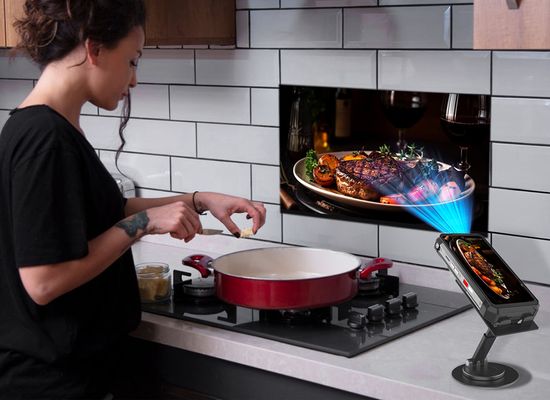
Moreover, the projector function in modern hybrids increases their cost only by ~$100-150.
A comparison analysis of the Unihertz 8849 Tank X vs Tank 5 demonstrates the adequacy of their price difference. For an additional $ 230 ($ 670 vs $ 900), the Tank 5 offers a significantly more powerful MediaTek Dimensity 9400e and a few less significant improvements. For reference, the sub-flagship 8-core Dimensity 9400e is today rightfully considered one of the best on the market, successfully competing with Snapdragon 8s Gen 4 and Samsung Exynos 2400e. Therefore, the choice depends on your budget and intended usage scenario. Gamers, in particular, will appreciate the ultra-performance of the Dimensity 9400e. Additionally, the series 5 includes the Tank 5 Pro. A 50-megapixel camera with FLIR thermal imaging technology is its key feature.
This video presents the rugged Unihertz 8849 Tank 5 phone-projector with Dimensity 9400e proccesor and 2K projector.