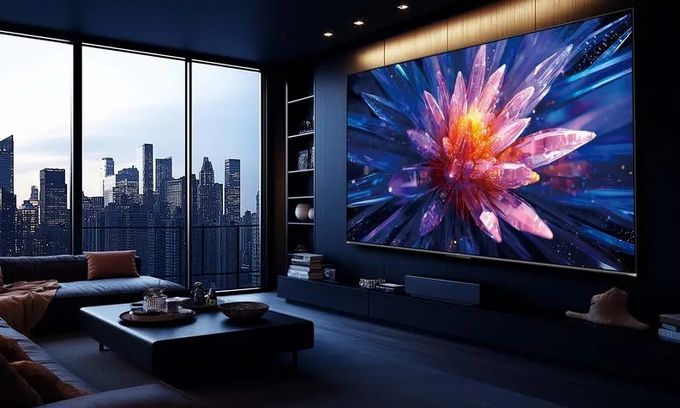
The popularity of massive 100-inch TVs has been steadily growing for almost half a decade. Prior to this, the home theater market niche belonged to projectors. Sure, companies offered huge TVs, but their prices started at $ 15,000 and were clearly outside the mass market.
Huge TVs vs UST projectors
The successful development of ultra-short throw (UST) projectors, which produce 100-inch or larger images from a short distance, has eliminated one of the main problems with projectors in the living room. Indeed, the projection distance of traditional mid-focal projectors is several meters, creating a placement challenge. Ceiling mounting is expensive, complex, and dramatically reduces the projector’s mobility. Placing it in the center of the living room creates the inconvenience of power cords on the floor. UST projectors are placed almost flush against the screen on the wall, eliminating this problem.
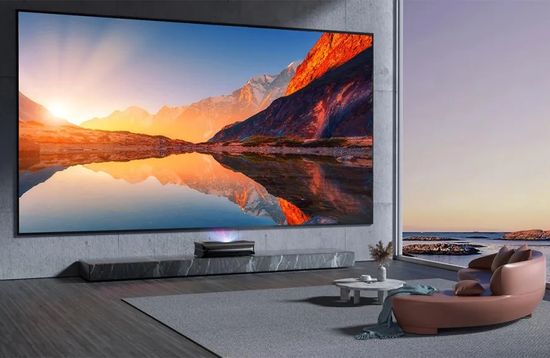
As a result, UST projectors have become an excellent alternative to traditional TVs in the living room. But unwilling to give up this lucrative market segment without a fight, TV manufacturers concentrated their efforts in this segment and they paid off. Within a few years, the market quickly filled with relatively inexpensive 100-inch TVs.
TCL 98R754 can be positioned as the first model in this trend. It was officially announced at CES in January 2022 as part of the brand’s ‘XL Collection’. Its launch price of under $ 8,000 was perceived by most experts as dumping.
From this moment on, most industry leaders actively joined the competitive battle. Initially, companies tried to lower the prices of huge models by limiting the use of expensive technologies. But within a few years, the situation has changed radically. Today, companies offer a wide range of 100-inch models with innovative technologies, including quantum dot (QD) tech, miniLED backlit, and others, at quite affordable prices of a few thousand dollars.
Budget-friendly 100-inch TCL TVs
TCL 98Q651G (2024)
– $ 1,400;
– QLED Pro (QD tech);
– 120Hz panel refresh r and 144Hz Variable Refresh Rate;
– TCL AIPQ Pro processor with Deep Learning AI;
– HDR PRO+ with Dolby Vision, HDR10+, HDR10, & HLG;
– Motion Rate 480 with MEMC Frame Insertion.
TCL 98QM7K (2024)
– $ 1,900;
– QD-Mini LED backlit;
– Dolby Vision, Dolby Vision IQ, HDR10+, HDR10 & HLG;
– Motion Rate 480 (frame interpolation to smooth motion);
– TCL Halo control system (new high energy LED microchip, super condensed micro lens, etc);
– LD2500 prestise dimming (2500 precisely controlled local dimming zones);
– high HDR brightness up to 2,400–3,000 nit;
– CrystGlow HVA Panel (blocks reflections).
The company also offers the less bright QM6K series. Key differences (QM7K vs QM6K):
– price – $ 1,900 – $ 2,000 vs $ 1,500 – $ 1,800;
– peak brightness – up to 3,000 nits vs 900 nits;
– 2,048 – 2,500 vs 500 local dimming zones.
TCL 98QM6K (2025)
– $ 2,100;
– QD-Mini LED;
– peak brightness 600 – 750 nits;
– 512 local dimming zones;
– TCL Halo Control system;
– up to LD500 precise dimming;
– 100W 2.0ch sound bar, Dolby Atmos and DTS Virtual:X.
TCL 98QM8K (2025)
– $ 4,000;
– QD-Mini LED;
– peak brightness – up to 5,000 nits;
– up to 3,840 local dimming zones;
– TCL Halo Control system;
– CrystGlow WHVA panel (contrast up to 7,000:1 and reflection reduction up to 0.5% with anti-glare film);
– Game Accelerator 288;
– Google TV with hands-free voice control.
Premium TCL TVs
TCL 98QM8L (US models) and TCL Q7D Pro (European/Global version)
– improved Super Quantum Dot (SQD) Mini-LED backlight;
– 100% BT.2020 color gamut coverage.
QM8L vs Q7D Pro
– price – $ 4,500 – $ 5,000 vs $ 3,800 – $ 4,500;
– peak brightness ~5,000 nits vs 2,000 nits;
– local dimming zones – 4,032 vs 1,152;
– panel – WHVA 2.0 (improved viewing angles) vs HVA 2.0 Pro;
– processor – MediaTek Pentonic 800 vs TSR AiPQ;
– ports – 4x HDMI 2.1 vs 2x HDMI 2.1;
– audio – Bang & Olufsen vs Onkyo 2.1 Hi-Fi;
– gaming – 144 Hz overclockable to 288 Hz, latency <10 ms, FreeSync Premium Pro vs 144 Hz overclockable to 288 Hz, Game Bar 4.0.
TCL 98RM9L
– US – $ 6,000 – $ 10,000, UK ~£ 8,000, Europe – € 6,000 – € 8,000;
– innovative RGB LED backlit.
The new RGB LED backlit uses several thousand red, green, and blue LEDs instead of traditional white or blue ones, but still requires an LCD panel in front. A wider color gamut and higher color accuracy are its main advantages;
– 11,520 local dimming zones;
– WHVA 2.0 panel.
WHVA 2.0/2.0 Ultra is an advanced panel technology developed by CSOT (China Star Optoelectronics Technology). It offers the deep blacks and high contrast of VA panels with improved viewing angles and colors;
– peak brightness – up to 6,000 nits;
– native static contrast of 7,000:1;
– 100% coverage for BT.2020 standard. /p>
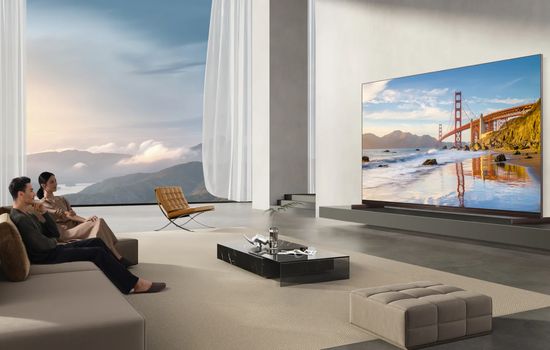
– $ 9,000;
– SQD-Mini LED;
– TCL Deep Color system;
– WHVA 2.0 ultra panel, up to LD20000 (pure black with up to 20,000+ precisely controlled local dimming zones), up to 10,000 nits, new TSR AI processor.
Budget-friendly 100-inch Hisense TVs
Hisense 100″ Class E6 Series (2025)
– $ 1,700;
– HDR format, including Dolby Vision, HDR 10+ Adaptive, HDR 10 and HLG;
– Dolby Vision IQ (optimization of picture brightness, contrast, and colors based on your room’s lighting with built-in AI light sensors and dynamic metadata);
– Dolby Atmos sound;
– Fire TV;
– Alexa built-in;
– Native 144Hz panel & AMD FreeSync Premium.
Hisense 100U7SG (2026)
– $ 2,500;
– Dolby Vision, HDR10+, IMAX Enhanced;
– 2.1.2ch sound system tuned by Devialet;
– QD-miniLED Pro backlit with 3,000 lokal dimming zones;
– native 165Hz refresh rate;
– Dolby Atmos and built-in subwoofers;
– VIDAA OS;
– Processor – HI-View AI Engine Pro;
– AI-powered Motion Rate 660 motion technology;
– Game Booster 330 with enhanced Game Bar.
Hisense 100UR7S (100U7Q Pro or 100U7S Pro)
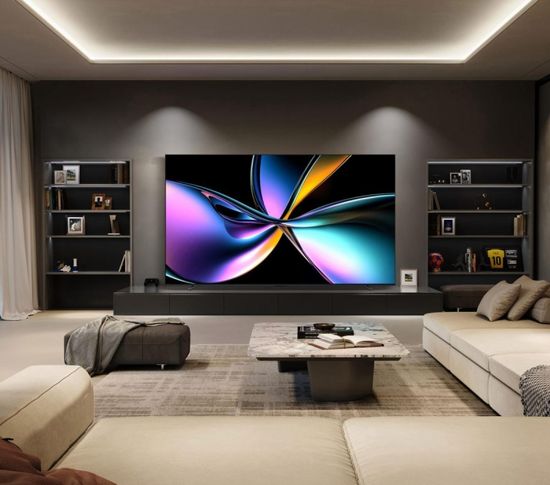
– $ 2,500 – $ 4,000 in USA or £ 1,900 – £ 2,500 in UK;
– miniLED backlit with 2,304 local dimming zones;
– peak brightness – up to 3,000 nits;
– contrast – VA matrix with native contrast of 5,000:1;
– gaming – 165Hz Game Mode Ultra, VRR (Variable Refresh Rate) and HDMI 2.1 ports;
– 2.1.2ch 60W audio.
New 100-inch Hisense TVs
Hisense 100U8SG (2026) vs 100U7SG
– $ 5,500 – $ 6,000 vs $ 4,000 – $ 5,500;
– miniLED backlit;
– number of dimming zones (reducing halos around bright objects on dark backgrounds) – 5,000-5,600 vs 1,248 or 1,620);
– brightness – 1,500-5,000 nits vs 800-1,500 nits;
– HDR10, HDR10+, Dolby Vision, and IMAX Enhanced support;
– 4.1.2ch audio up to 82W vs 2.1ch 50W (2x 15W + built-in 20W subwoofer).
Hisense 100UR9S (2026) and 100UR8S (2026)
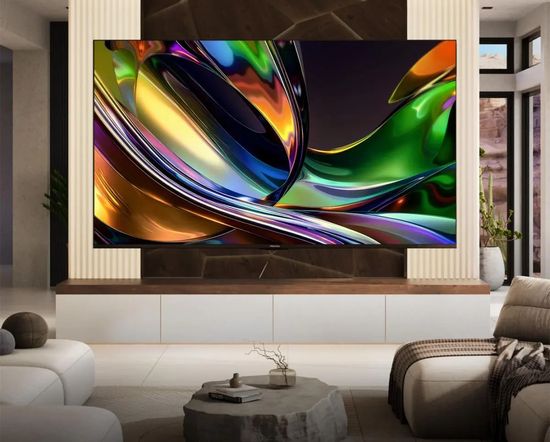
The price of Hisense 100UR9S varies between $ 5,000 and $ 10,000 depending on promotions. The Hisense 100UR8S costs € 6,000 in Europe or $ 5,000 in US.
Both series use innnovative RGB LED backlit, cover 100% of the BT.2020 color gamut, feature anti-glare matte screens, 180Hz native panels, anti-reflective coatings, and Dolby Vision 2 support.
For reference, RGB LED is the industry term for new backlit. It uses RGB clusters that replace traditional white/blue LEDs to create colors using quantum dot (QD) tech. In fact, the RGB modules eliminates the need for an RGB filter, however a liquid crystal layer is still used. But instead of color filtering, it modulates the color flux intensity. The new technology expands the color gamut with spectrally narrower RGB light, improves contrast due to more precise local dimming, and increases brightness due to the absence of RGB filter losses.
Differences (100UR9S vs 100UR8S):
– price (100″) – $ 5,000 – $ 10,000 vs € 6,000 / $ 5,000;
– 4,000 nits vs 3,500 nits peak brightness;
– local dimming zones (100″) – 1,920 vs 2,520;
– audio – Devialet-tuned 4.1.2ch system vs 2.1.2ch.
– connectivity – 3x HDMI 2.1 ports and a DisplayPort 2.1 (USB-C) for PC gamers vs 4x full HDMI 2.1 ports.
Samsung, LG and Sony massive TVs
Samsung
– 98DU9000 (DU90) ~ $ 1,500 – $ 4,000, 2024, no Quantum Dot tech, no miniLED backlit;
– U9000H (UE98U9000HUXUA) ~ $ 2,000, £ 1,900, 2026, no Quantum Dot tech, no miniLED backlit;
– 98Q7F (QLED) ~ $ 2,200 – $ 2,500, 2025, Quantum Dot tech, no miniLED backlit;
– 98Q80C (QE98Q80C) ~ $ 3,000, 2023, Quantum Dot tech, no miniLED backlit;
– M90H (UN100M90H, marketed as Pure Spectrum Color or Color Booster Pro) ~ $ 3,000 – $ 3,500, 2026, QD, miniLED backlit (Supreme miniLED Dimming, over 5,000 local dimming zones), NQ4 AI Gen2 processor, Vision AI.
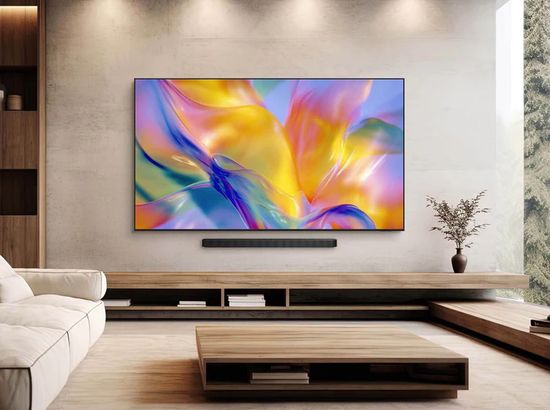
– 98QN90D (QE98QN90D) Neo QLED ~ $ 4,500 – $ 5,400, £ 4,000 – £ 5,000, 2024, Quantum Dot tech, miniLED backlit (1,320 local dimming zones), NQ4 AI Gen2 processor;
– QE98QN80F ~ $ 6,000, 2023, Quantum Dot tech, miniLED backlit (1,920 local dimming zones) NQ4 AI Gen2 processor;
LG
– LG 100QNED86A6 ~ $ 3,500 (USA) and € 3,000 – € 5,000 (Europe), 2025, miniLED (~200 local dimming zones), NanoCell (QD analogue), α8 AI Processor Gen2.
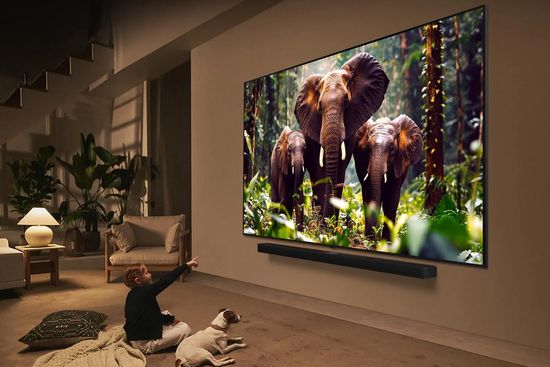
– MRGB95 / MRGB96 – $ 8,000, 2026, new RGB LED backlit (over 1,000 dimming zones), α11 AI Processor Gen 3.
Sony
– Sony BRAVIA 3 II (K-100XR35M2) ~ $ 3,100, 2026, XR Triluminos Pro (QD analogue), no miniLED backlit, Cognitive XR processor, Google TV;
– BRAVIA 5 miniLED (K-98XR50) ~$ 5,000, 2025, miniLED backlit and XR Triluminos Pro, 720 local dimming zones;
– BRAVIA XR X92 (XR-100X92, 99.5″ viewable) ~$ 8,000 – $ 12,000, 2021, XR Triluminos Pro (QD analogue), no miniLED backlit, Cognitive Processor XR.
Conclusion
Overall, the demand for massive TVs is fully satisfied. Companies from Heavenly Empire offer a wider range at quite reasonable prices starting at $1,400. Of course, Samsung, Sony and LG also compete in this segment, but the number of their 100-inch models is significantly smaller.
Even budget-friendly modern huge TVs offer high picture quality thanks to technologies, including, for example, QD tech with a wide color gamut and accurate colors, and miniLED backlit with superb contrast.
Several main factors influence the model choice. The advantages of new technologies are primarily evident when playing complex HDR content, such as a starry sky or a night metropolis. But even budget-friendly TVs perform brilliantly in SDR format, for example, TV shows or series set in studios. Unfortunately, HDR content is currently available primarily through expensive Netflix subscriptions and Blu-ray discs. Cable networks and satellite TV offer only SDR content due to network bandwidth limitations. For example, the requirements for 1 hour of 4K HDR video is 15-30 GB (bitrate ~35-80 Mbps) for with the H.265 / HEVC codec vs 10-20 GB (~25-50 Mbps) for SDR. But choosing an expensive model with a full suite of technologies for watching TV series seems suboptimal.
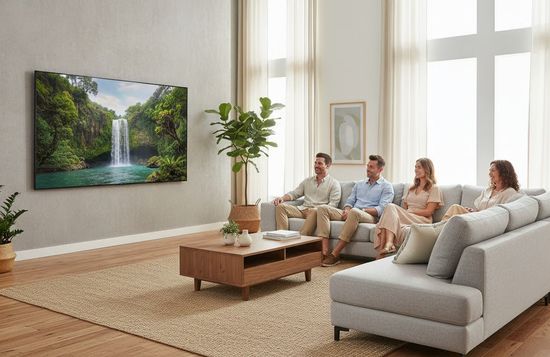
Placement of a 100-inch panel can also be an issue. Ophthalmologists recommend the optimal viewing distance equal to the screen diagonal with a multiplier of 1.3. Therefore, the ideal viewing distance for a 100-inch screen is 4 meters. Its placement unlikely to be a problem in a cozy villa, but it’s more challenging for the living room of an ordinary apartment.
The video introduces the 100-inch Samsung M80H TV 2026.